




As a commonly used non-contact stepless voltage regulation special equipment in the industrial voltage regulation field, the magnetic voltage regulator integrates the core functions of a saturable reactor and a power transformer, serving as a core supporting device for industrial temperature control and special furnace power supply scenarios. The latest current domestic industry standard applies to continuous stepless voltage regulation conditions in 50Hz power frequency environments with a voltage of 10kV and below.
Different from traditional voltage regulators with sliding contacts and mechanical transmission structures, magnetic voltage regulators have no easily wearable movable voltage regulation components. They are entirely composed of a transformer body and a saturable reactor, which realize both electrical connection and magnetic coupling, greatly improving operation stability.
In terms of core structure, the iron cores of magnetic voltage regulators have two different designs: small-capacity products mostly use toroidal iron cores wound from silicon steel strips, while large-capacity products generally use columnar iron cores laminated from silicon steel sheets, adapting to operation requirements of different power levels.
Its voltage regulation logic is clear and controllable: by changing the current of the DC control winding, the magnetization degree of the saturable reactor's iron core can be adjusted, thereby changing the impedance value of the reactor winding, redistributing the proportion of the power supply voltage across the reactor winding and the primary winding of the transformer, and finally realizing smooth and continuous adjustment of the output voltage on the secondary side. When the DC control current is 0, the reactor iron core is not magnetized, with the highest AC permeability; almost all the power supply voltage drops across the reactor, the voltage on the primary side of the transformer is extremely low, and the output reaches the lower voltage limit. As the DC control current gradually increases, the reactor iron core gradually saturates and the impedance continues to decrease, the voltage on the primary side of the transformer rises synchronously, and the output voltage rises smoothly accordingly. When the DC control current reaches the rated value, the reactor is nearly fully saturated with minimal impedance; almost all the power supply voltage is applied to the primary side of the transformer, and the output reaches the upper voltage limit.
In terms of actual operation performance, the core advantages of magnetic voltage regulators are prominent: there is no mechanical wear throughout the process, the overall equipment reliability is extremely high, and it supports stepless smooth voltage regulation under load conditions. It can not only directly realize open-loop manual voltage regulation through low-power DC signals, but also connect to an automatic control system to complete closed-loop automatic voltage regulation, adapting to different control requirements. In addition, the magnetic voltage regulator has the inherent current limiting characteristic of the saturable reactor, with extremely strong short-circuit resistance, and has an ideal drooping external characteristic suitable for high-current industrial furnace loads, whose operation performance in such scenarios far exceeds that of ordinary voltage regulation equipment.
Of course, attention should also be paid to some characteristic limitations when using magnetic voltage regulators: the output voltage waveform will have certain distortion under load conditions. The rated voltage regulation range of the equipment is calibrated for the rated load resistance, so it is not suitable for long-term no-load operation; the lower limit of voltage regulation will shift significantly under no-load conditions, and such improper operations should be avoided in combination with working conditions during selection and use.
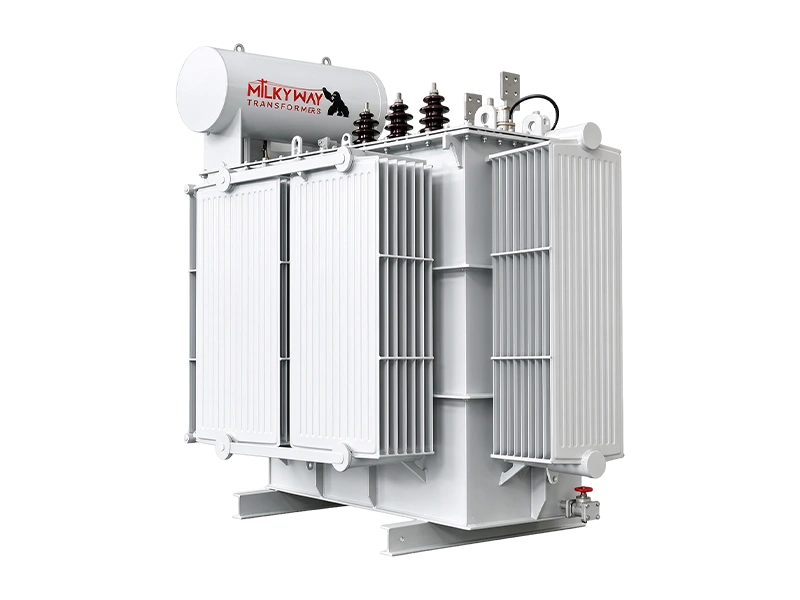
At present, magnetic voltage regulators have been widely used as supporting voltage regulation power supplies for special industrial equipment, covering a wealth of mature scenarios: in the fields of thermal processing and heat treatment, they are often used for power supply and voltage regulation of various salt bath electric furnaces, vacuum electric furnaces, special smelting furnaces, crystal growth furnaces, and cracking furnaces; in special industrial kiln scenarios, they are core equipment for temperature control and power supply of glass electric melting furnaces and refractory fiber electric melting furnaces; in some special high-voltage and high-current scenarios requiring soft characteristic power supplies, such as high-voltage electrostatic dust removal and high-current bombardment furnaces, magnetic voltage regulators also play an irreplaceable role.
Conventional commercially available magnetic voltage regulators cover multiple capacity ranges, with input voltages adaptable to conventional civil and industrial power supply standards, and high-voltage customized models can also adapt to higher-level input requirements. Most of such equipment are designed for low-voltage and high-current scenarios; the output voltage range can be individually customized according to the actual usage requirements of the load. Conventional products are suitable for indoor operating environments without corrosive gases, and can meet the continuous operation requirements of most ordinary industrial production scenarios. If your production scenario has high requirements for the continuous operation reliability and short-circuit resistance of voltage regulation equipment, especially when used with supporting high-current industrial furnace loads, the magnetic voltage regulator is a highly stable voltage regulation solution well worth choosing.