




Distribution transformers, often referred to as ""distribution transformers"" for short in the industry, are core static power equipment in the 10~35kV voltage level distribution network that directly transmit electric energy to end users. They are also a key hub connecting the grid side and the power consumption side of the power system, and are directly related to the stability of power consumption in daily production and life.
Basic Definition and Core Functions
Distribution transformers convert alternating current voltage and current of the same frequency based on the principle of electromagnetic induction, and their core value is concentrated in three dimensions:
First, voltage transformation: stepping down the high-voltage electricity on the grid side into standard low-voltage electricity for civil and industrial use on the user side, adapting to the access requirements of various daily power consumption devices;
Second, loss reduction and efficiency improvement: through reasonable voltage level conversion, avoiding unnecessary line loss caused by long-distance transmission of low-voltage electricity, and improving the operating efficiency of the entire distribution network;
Third, safety isolation: realizing electrical isolation between the primary high-voltage side and the secondary low-voltage side, greatly reducing the risk of electric shock at the user end, and comprehensively ensuring power consumption safety.
Mainstream Classification and Applicable Scenarios
Distribution transformers on the market are classified according to different dimensions to correspond to different usage requirements:
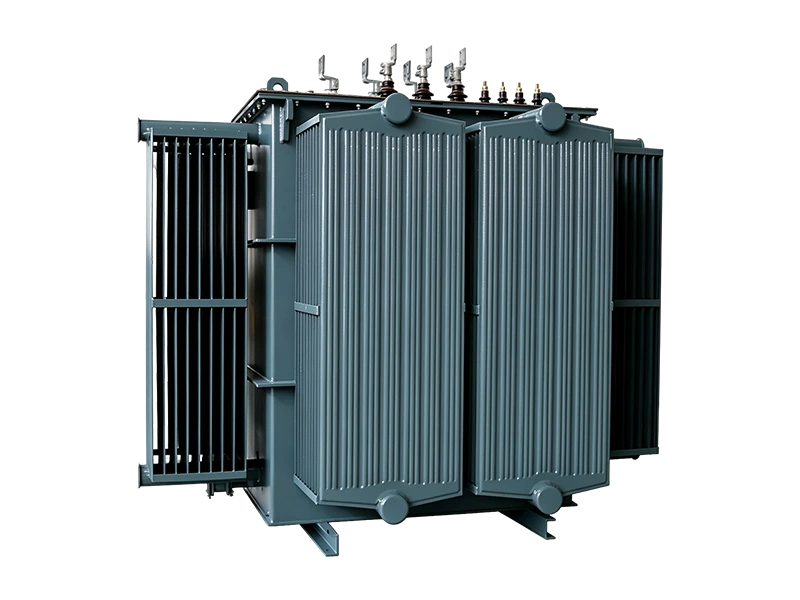
Divided by insulation medium, the two most common types are oil-immersed transformers and dry-type transformers. Among them, oil-immersed transformers use special insulating cooling oil as the medium, with good heat dissipation performance and low comprehensive use cost, and are more suitable for outdoor power grids and large-capacity power supply stations; dry-type transformers use air or epoxy resin solid insulation, with outstanding fire and explosion protection performance, and are suitable for indoor buildings, densely populated areas, and all places with high requirements for fire safety.
Divided by voltage regulation method, they can be divided into two types: no-load voltage regulation transformers and on-load voltage regulation transformers. No-load voltage regulation transformers require manual adjustment of the tap switch after power failure, and are suitable for conventional urban and rural distribution scenarios with small load fluctuations; on-load voltage regulation transformers can automatically adjust the output voltage with power on, and are suitable for industrial and commercial parks with large load changes and high requirements for power supply stability.
General Usage Characteristics
Common small and medium-sized distribution transformers on the market have a wide coverage of rated capacity, adopt universal standard voltage output on both high and low voltage sides, are conventionally suitable for most areas with an altitude of less than 1000 meters, have a wide range of ambient temperature adaptation, and support multiple deployment methods such as outdoor pole-mounted, ground-mounted platform, and box-type substation integration, with high installation flexibility, and can adapt to the distribution construction needs of different regions.
Latest Technology Development Trends in the Industry
At present, the new generation of solid-state distribution transformers is gradually moving towards large-scale industrialization. This new generation of distribution transformers built based on new semiconductor devices has achieved a full-chain localization breakthrough, and has a significant performance improvement compared with traditional products: not only the amount of raw materials and equipment volume are significantly reduced, the overall power supply efficiency is greatly improved, but also new functions such as two-way power flow and direct AC-DC conversion are added. It is called an ""energy router"" on the grid side in the industry, and can be directly connected to new loads such as photovoltaic, energy storage, supercharging facilities, and intelligent computing centers, eliminating the intermediate multi-level inverter conversion links. At present, it has completed landing demonstrations in multiple new energy and new infrastructure scenarios, and has a very broad application space in the future.
Key Points for Selection, Operation and Maintenance
In the selection stage of distribution transformers, it is necessary to strictly match the actual load capacity to avoid the equipment running in an overload state for a long time, so as to effectively extend the service life of the equipment. In the daily operation and maintenance and condition assessment stage, it is necessary to check the historical maintenance records of the equipment, regularly carry out insulation performance tests. For oil-immersed equipment, it is also necessary to regularly test the relevant indicators of insulating oil, verify the actual heat dissipation and load-carrying performance of the equipment through load temperature rise tests, troubleshoot potential operation hazards in advance, and minimize the probability of sudden power supply failures.
As the core hub of the distribution network, the reasonable selection, standardized operation and maintenance, and technical upgrade of distribution transformers are directly related to the stability of the entire power supply network and power consumption safety, and are also a very key part in the current construction process of the new power system.