




The float glass tin bath transformer is an exclusive core supporting power supply equipment for the tin bath electric heating system of float glass production lines, specially adapted to the special working conditions of heating elements in the tin bath area. It is a key electrical equipment that ensures precise and stable temperature during the glass ribbon forming process, and is directly related to the forming quality of finished float glass and the continuous operation efficiency of the entire production line.
This type of special transformer is directionally optimized for the special needs of tin bath scenarios, and its core functional value is much higher than that of ordinary industrial transformers. Firstly, it can perfectly adapt to the aging characteristics of heating elements: the resistance of heating elements in the tin bath will naturally increase after long-term use, and conventional transformers cannot match such working condition changes. The float glass tin bath transformer has an ultra-wide output voltage adjustment range, which can maintain a stable heating power by increasing the output voltage, avoid abnormal furnace temperature drop, and greatly extend the overall service life of heating elements. Secondly, it has reliable power isolation and anti-interference capabilities, which can realize complete electrical isolation between the load side and the power grid side, preventing power grid fluctuations from being directly transmitted to the tin bath heating system and affecting temperature stability. High-end customized models are equipped with a special double-shielded winding structure, which can greatly reduce external conducted emissions, and will not cause electromagnetic interference to precision sensors for position and thickness detection in the tin bath area, avoiding common forming defects such as streaks and uneven thickness of the glass ribbon from the power supply source. The deeply optimized special model can also greatly shorten the waiting time for preheating startup, avoid glass liquid level fluctuations caused by startup delays, and its overall failure shutdown rate is much lower than that of standard industrial transformers, providing sufficient support for long-term stable temperature control of the tin bath.
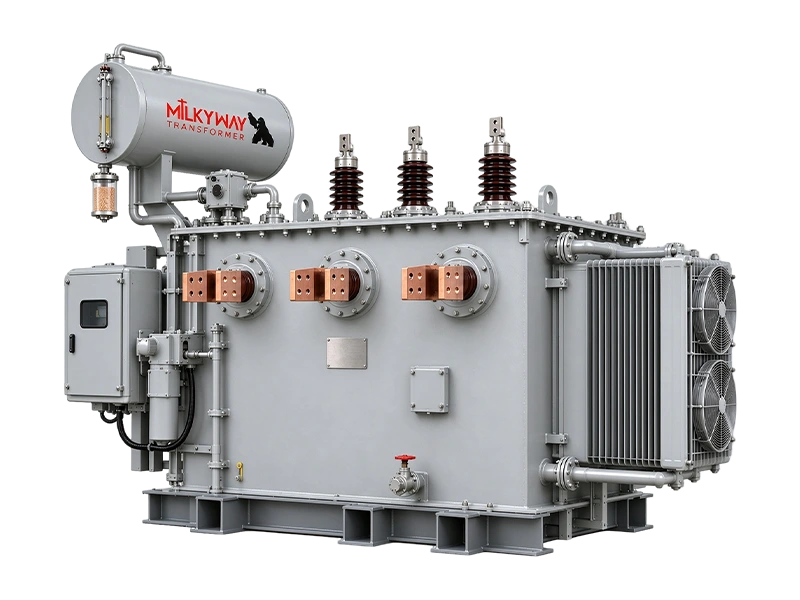
At present, the float glass tin bath transformers in the industry are mainly divided into two mainstream series: single-phase and three-phase. They can be flexibly selected according to the configuration of the tin bath heating system of float glass production lines of different specifications, and the output voltage gears support customization on demand, which can perfectly adapt to the rated operation requirements of heating elements of different specifications. The product has a high overall insulation and heat resistance grade, can withstand the high temperature environment of the tin bath area for a long time, and provides multiple protection grades for selection. The whole series adopts natural air cooling to adapt to the installation requirements of different sites.
To match the harsh working conditions of the tin bath area, this type of special transformer has a large number of exclusive designs: the core magnetic conductive element is made of high-grade high-quality cold-rolled silicon steel sheet, which has lower no-load loss and better operating temperature rise control performance, fully meeting the industry-specific standards. Models with high protection grade are equipped with labyrinth heat dissipation air ducts, which have a longer filter replacement cycle, can adapt to the corrosive working conditions of high dust and trace sulfides in the tin bath area, and greatly reduce the daily operation and maintenance burden.
During the equipment installation stage, a number of key verification indicators need to be strictly checked, including the alignment accuracy of the foot mounting holes, the safe distance between the secondary side live copper bars and the kiln body steel structure, the overall installation levelness of the equipment, the reserved distance between the cooling fan air inlet and the surrounding walls, etc., to avoid the hidden danger of temperature rise exceeding the standard caused by insufficient cooling efficiency from the installation source. In the daily operation and maintenance stage, targeted maintenance is also required in combination with the special working conditions of the tin bath: there is a certain concentration of sulfur-containing gas in the tin bath area, and the exposed copper contact surface will easily form a copper sulfide conductive film after long-term exposure to such an environment, leading to a rapid increase in contact resistance and overheating faults. Therefore, in the first year of operation, the contact surface of the secondary side copper bars needs to be regularly wiped with a special solvent, and regular contact surface inspection and maintenance are also required during long-term operation to avoid poor contact affecting power supply stability.
For float glass production enterprises, replacing ordinary industrial transformers with exclusive float glass tin bath transformers can improve the operation stability of the tin bath electric heating system from the underlying power supply, greatly reduce various glass forming defect rates caused by temperature fluctuations, reduce the number of unplanned shutdowns, and provide a reliable guarantee for the long-term production of high-quality float glass by the production line.