




Magnetic voltage regulating transformers, also commonly referred to as magnetic voltage regulators or magnetically controlled voltage regulating transformers, are integrated voltage regulating power supply devices without mechanical contacts. Their core design deeply integrates the functions of a saturable reactor and a power transformer. With unique operational advantages, they have been widely applied in many scenarios such as industrial production and new power distribution networks.
Many users who first encounter such devices are curious about their voltage regulation logic, whose core working principle is not complicated: the device adjusts the distribution ratio of the power voltage between the primary winding of the transformer and the reactance winding of the reactor by controlling the magnetic saturation level of the saturable reactor, and finally realizes smooth adjustment of the output voltage on the secondary side. When the DC control current is 0, there is no DC magnetization effect on the reactor core, and the AC permeability is at a high level. Most of the input voltage is distributed on the reactance winding, and the voltage obtained on the primary side of the transformer is extremely low, corresponding to the lower limit of the output voltage of the device. If the DC control current is gradually increased, the reactor core will be gradually magnetized by DC, the AC permeability will continue to decrease, the voltage division proportion of the reactance winding will continue to drop, the voltage on the primary side of the transformer will continuously rise, and the output voltage will gradually increase accordingly. When the DC control current reaches the rated value, the reactor core is deeply saturated, the voltage division is almost negligible, almost all the input voltage is applied to the primary side of the transformer, and the output voltage reaches the maximum value.
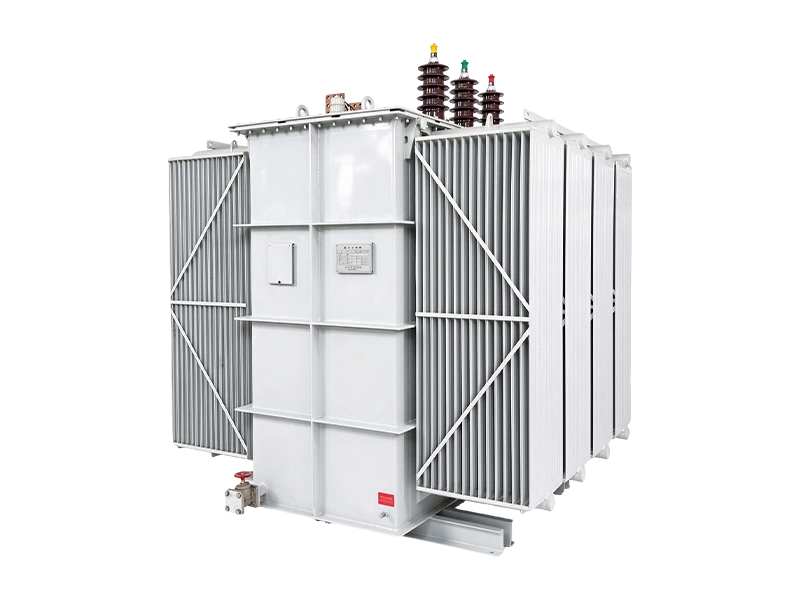
According to the difference of core types, the magnetic voltage regulating transformers on the market are mainly divided into two categories. Small-capacity models mostly use toroidal cores wound from silicon steel strips, the windings are wound with single-layer insulated copper wires, and sliding brushes can assist in voltage regulation during operation; large-capacity high-power models generally use laminated columnar silicon steel cores consistent with conventional power transformers to adapt to the operation requirements of heavy loads.
The core advantages of such devices are prominent. First, they have excellent voltage regulation performance, which can realize stepless smooth and continuous voltage regulation. They support not only manual open-loop control, but also access to different sensing signals to complete closed-loop automatic control, with fast voltage regulation response and high precision, which can fully track load fluctuations and distributed photovoltaic output changes to realize real-time voltage stabilization. Second, they have high operational reliability. The device has no transmission structure and wearing parts of traditional mechanical voltage regulation, has extremely strong short-circuit resistance, and the inherent current-limiting characteristic of the reactor can output special external characteristics adapted to industrial furnaces. The whole process of automatic operation hardly requires frequent maintenance. In addition, such devices have extremely strong adaptability, especially suitable for special power supply scenarios of high-voltage output or low-voltage high-current, and many special power supply requirements that are difficult to be covered by conventional voltage regulating devices can be met by such devices.
Of course, conventional magnetic voltage regulators also have certain usage limitations. The voltage regulation range marked by such devices usually only corresponds to the operating state of the rated load resistance, and the voltage regulation range will be significantly reduced under no-load conditions, so they are not suitable for long-term no-load operation; at the same time, affected by the working characteristics of the saturable reactor, there will be a certain degree of harmonic distortion in the output voltage waveform, and the distortion degree will increase with the increase of output power, so adaptation should be made in advance combined with scenario requirements during selection and use.
At present, the applications of magnetic voltage regulating transformers mainly cover two major directions. The first is traditional industrial scenarios. Such devices are standard matching voltage regulating power supplies for thermal processing and heat treatment systems, widely adapting to the power supply and voltage regulation requirements of various industrial furnace equipment, and have been long-term verified in a large number of industrial production projects. The second is the rapidly popularized new power distribution network scenarios in recent years. The new generation of magnetically controlled stepless voltage regulating transformers is specially designed for the common problems of voltage flicker and seasonal voltage instability in urban and rural end areas with high penetration of distributed photovoltaics and old urban business districts, which can effectively ensure the stable power supply of various precision electrical equipment and household appliances, and greatly improve the refined power supply level of the distribution network.
On the whole, magnetic voltage regulating transformers are a type of voltage regulating power supply devices with strong pertinence. As long as appropriate models are selected in combination with their own operating conditions and load characteristics, their core advantages of no contact and high reliability can be fully utilized to provide stable and adjustable power supply support for various scenarios.