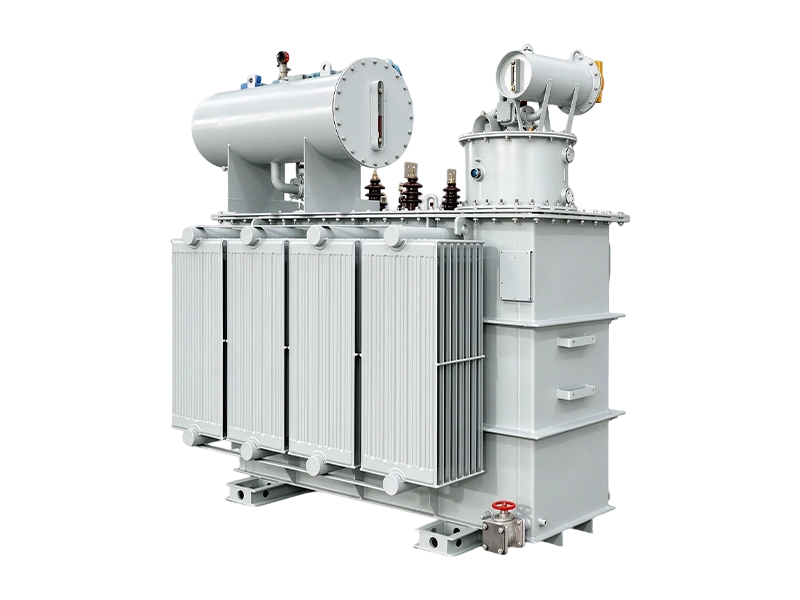
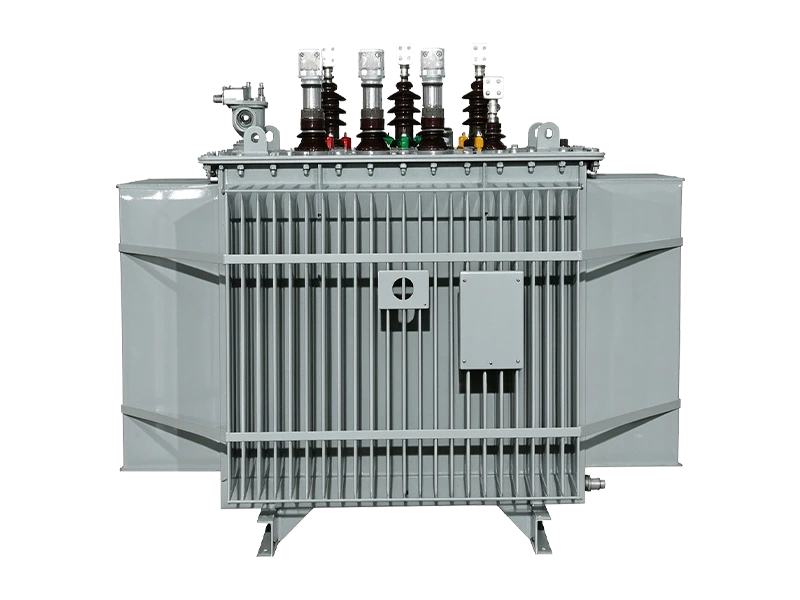
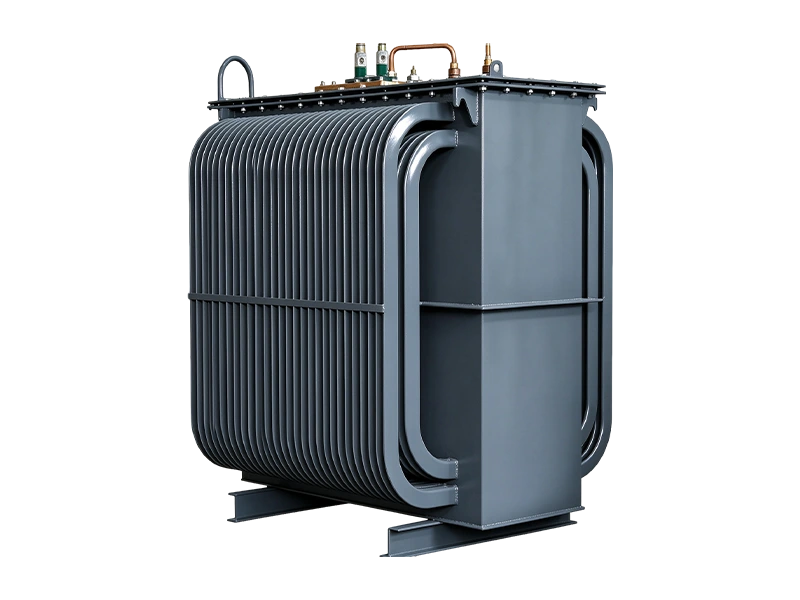
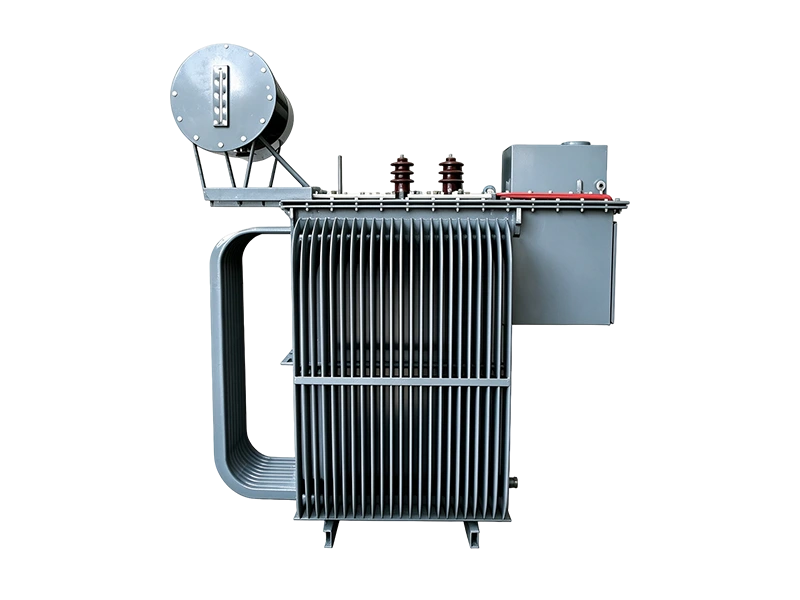
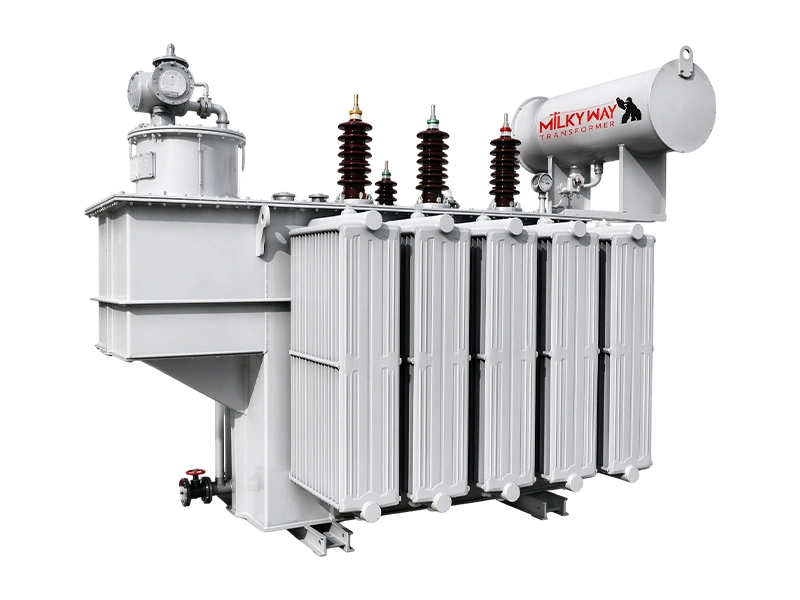
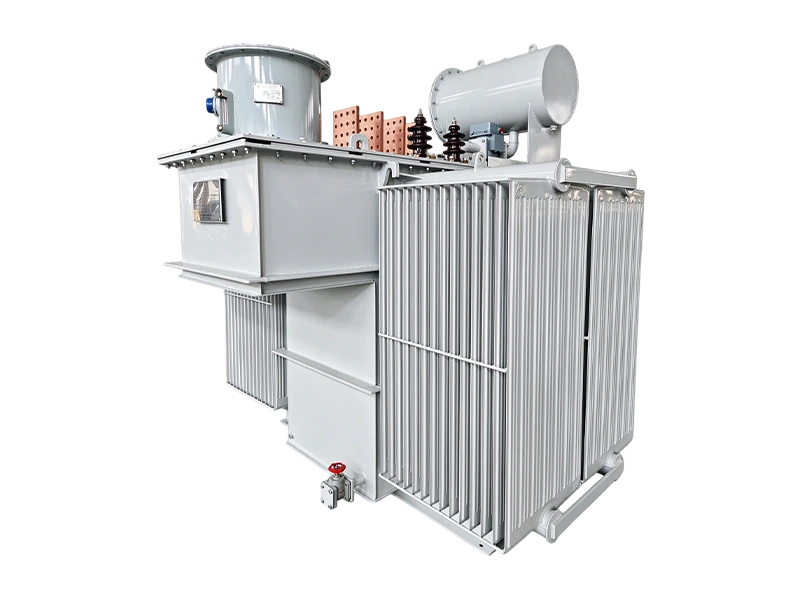
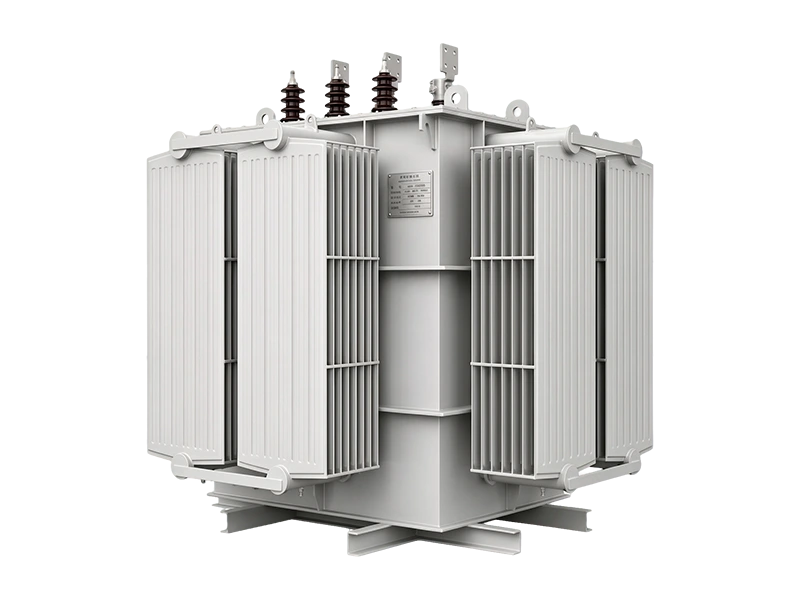
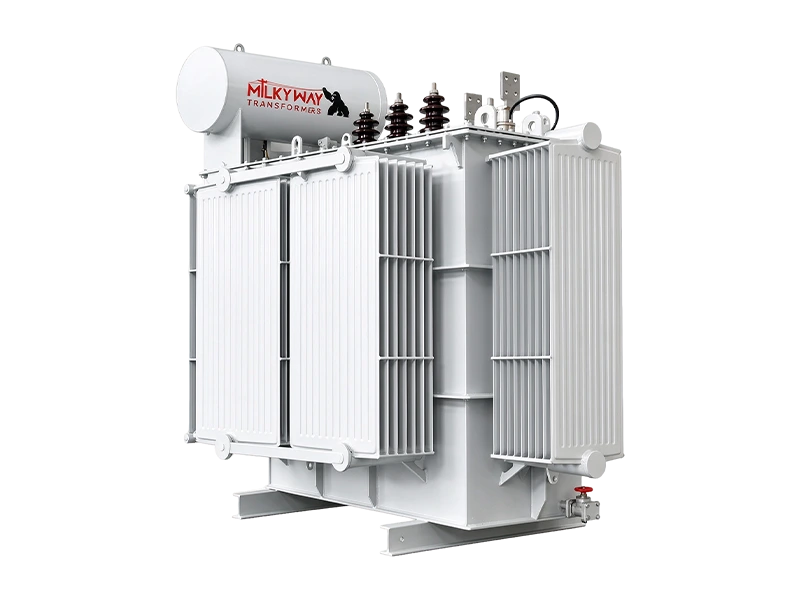
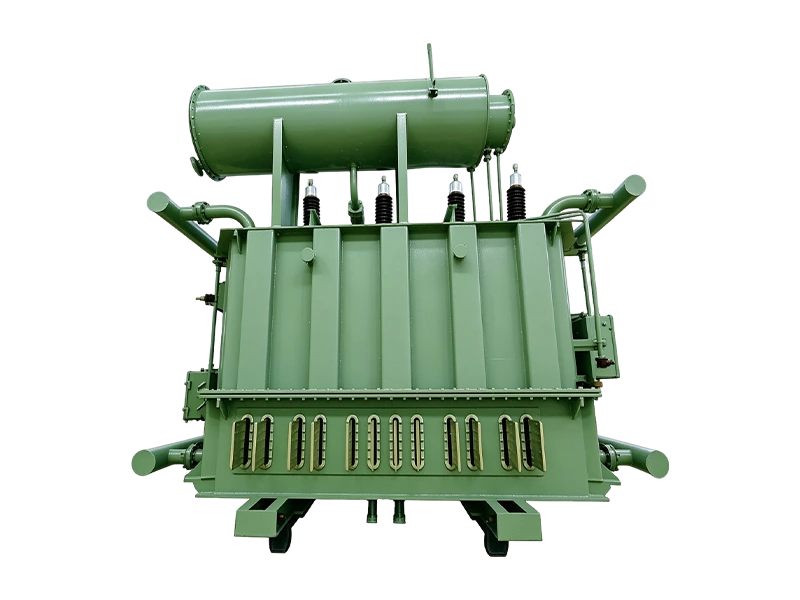
The electroslag remelting transformer plays a key role in the industrial steelmaking field and features the following characteristics.First, strong overload capability. During electroslag remelting, operating conditions are complex and changeable, with sudden high-power demands arising from time to time. The transformer can withstand loads far beyond its rated capacity for short periods, ensuring stable operation of the electroslag furnace and keeping the molten steel refining process unaffected.Second, a wide voltage regulation range. To meet the specific voltage and current requirements of refining different steel grades, it can regulate voltage flexibly over a wide range, closely matching the process parameters of each stage of the electroslag furnace and enabling effective control of molten steel temperature and composition.Third, well-matched impedance. Through careful design of the windings and other components, the impedance of the electroslag remelting transformer is well matched to the load characteristics of the electroslag furnace, reducing energy losses, improving the efficiency of electric energy conversion, and lowering steelmaking costs. At the same time, it supports long-term reliable operation of the equipment, extends its service life, and provides dependable support for high-quali...
As a key component of industrial heating equipment, the stable operation of the furnace transformer has a direct bearing on production efficiency and safety. The following are the key precautions for its use:1. Load MatchingStrictly control the connected load according to the nameplate parameters, and avoid long-term overload, which could lead to winding overheating and aging. It is recommended to adopt a staged voltage-raising method at start-up to avoid transient inrush current that could damage the insulation layer.2. Cooling System ManagementRegularly check the unobstructed flow of the radiator/oil cooling system, and remove accumulated dust and oil stains; monitor the oil temperature indicator to ensure normal circulation of the cooling medium. In high-temperature environments, auxiliary ventilation facilities may be added.3. Insulation Monitoring and MaintenanceMeasure the insulation resistance between windings and to ground monthly with a megohmmeter (it should be ≥1 MΩ). If an abnormal drop is found, investigate moisture ingress or carbonization immediately. Pay special attention to the tightening condition of terminal connections, as looseness may cause partial discharge.4. Environmental Protection MeasuresKeep the installation area dry and well ventilated, away from corrosive gases and con...
The arc furnace transformer is a key equipment in industrial smelting, and its safe and stable operation requires strict adherence to the following points:1. Load MatchingThe output voltage and current should be adjusted according to the electrode diameter and the charge impedance to avoid overload, which could cause winding overheating or insulation aging. Before start-up, always confirm that the secondary side is in an open-circuit state to avoid inrush current caused by a sudden flux increase.2. Cooling System MaintenanceRegularly check the oil level, temperature rise, and dielectric strength of the equipment, and ensure that the cooling fans operate normally. For dry-type models, monitor the effectiveness of the temperature control device and clear accumulated dust promptly to keep ventilation unobstructed.3. Insulation MonitoringUse online monitoring tools to track changes in the insulation resistance of components such as bushings and tap changers. If abnormal discharge sounds or a burnt smell is detected, shut down the equipment immediately for inspection and repair. In harsh environments, anti-pollution flashover measures should be strengthened.4. Operating ProceduresIt is strictly prohibited to switch taps under load; after a power outage, the equipment must be fully discharged before high-...
Preparations before the manufacturing of furnace transformers include the following:1. Technical Design and PlanningDemand analysis and scheme formulation: Based on the load characteristics of the industrial furnace (such as smelting, quenching, etc.), the capacity, voltage class, and tap-changing method of the furnace transformer are determined. The design needs to meet key parameter requirements such as short-circuit impedance and overload capability.Drawing and process design: Winding layout drawings are prepared, the core stacking sequence is planned, and detailed procedures such as insulation treatment and welding processes are formulated.2. Material and Component ProcurementSelection of core materials: High-permeability silicon steel sheets are used for the core, and copper or aluminum wire is used for the windings to ensure electrical conductivity and heat resistance.Preparation of standard components: These include bushings, tap changers, cooling devices (oil immersed types require radiators), etc., all of which must comply with industry standards.3. Equipment Commissioning and Environmental ControlCalibration of production equipment: The accuracy of winding machines, vacuum drying ovens, test platforms, and other equipment is checked to ensure uniform coil winding and compliant insulation p...
The oil immersed distribution transformer is the most numerous transformer category in the power system, supplying power directly to end users. From rural distribution stations to urban residential transformer rooms, oil immersed distribution transformers carry out the task of stepping down 10kV or 35kV voltage to the 400V user voltage.Energy efficiency upgrading is the current main theme. The new energy efficiency standard sets higher requirements for the no-load losses and load losses of distribution transformers. Grade 1 energy efficiency products require the use of high-grade silicon steel sheets or amorphous alloy cores, together with optimized winding structures. Amorphous alloy transformers offer a distinct advantage in no-load losses but at a higher cost, making them suitable for scenarios with high annual operating hours. Silicon steel transformers, on the other hand, strike a balance between load losses and cost. The fully sealed structure has become the mainstream configuration: fully sealed transformers use corrugated fins or expansion radiators to compensate for oil volume changes, eliminating the need for an oil conservator and a breather, which reduces the risks of oil aging and moisture ingress. This structure is especially popular in rural grid renovation, as rural distribution stat...
The magnetic voltage regulator is a voltage regulation device that organically combines a saturable reactor with a transformer. The reactor is mainly responsible for regulating the input voltage of the transformer, while the transformer steps the adjustable input voltage up or down to any voltage value required by the load. The two are connected both electrically and magnetically. Structurally, it resembles an ordinary power transformer, but unlike other types of voltage regulators, it has no mechanical transmission device and no movable contacts. This contactless, moving-part-free characteristic makes it particularly suitable for high-voltage output or low-voltage, high-current output applications. At present, this type of regulator has been widely adopted as the voltage-regulating power supply for salt bath furnaces, electron bombardment furnaces, high-voltage electrostatic precipitators, and similar equipment.Basic Structure and Circuit RelationshipA magnetic voltage regulator consists of two parts: a reactor and a transformer. The reactor is provided with an AC working winding and a DC control winding, while the transformer has a primary winding B1 and a secondary winding B2. The AC working winding G of the reactor is connected in series with the primary winding B1 of the transformer, and it is ...
The furnace transformer is a dedicated power supply transformer for steelmaking electric arc furnaces, and its capacity is configured according to the size of the arc furnace and the requirements of the smelting process. To meet the voltage regulation needs during smelting, the furnace transformer controls the supply voltage through tap-changing methods, which fall into two main types: on-load tap changing and off-circuit tap changing.Tap-Changing Methods and Structural FormsLarge furnace transformers with on-load tap changing usually do not carry a series reactor. Their voltage regulation can be performed under load, meeting the operating requirements of continuous smelting in large electric arc furnaces.Medium and small furnace transformers with off-circuit tap changing can be divided, by structural form, into two types: those with a series reactor and those without. Both structures allow impedance to be changed at the two highest secondary voltage levels, but in different ways: the former relies on switching the series reactor in and out to change the impedance, while the latter changes the winding impedance by altering the connection method of the transformer's own high-voltage winding. This difference determines the respective focus of the two structures in terms of applicable scenarios and...
The noise generated by magnetic voltage regulators during operation originates from the core. Under the action of an alternating magnetic field, the dimensions of silicon steel sheets undergo slight changes—a phenomenon known as magnetostriction. Since the magnetostrictive variation cycle is half a period of the power frequency, the resulting body vibration has a fundamental frequency of twice the power frequency, manifesting as a continuous low-frequency hum. It can be said that the vibration of silicon steel sheets is mainly determined by the magnetostrictive properties of ferromagnetic materials.The magnetostriction coefficient is not fixed; it is constrained by multiple factors. The first is the material of the silicon steel sheets: under the same magnetic field strength, silicon steel sheets of better quality exhibit lower magnetostriction and therefore lower noise, while a higher magnetostriction coefficient corresponds to higher noise. The second is the magnetic field strength itself: the stronger the magnetic field, the more pronounced the magnetostriction, and the greater the noise.The surface condition and heat treatment process of silicon steel sheets are equally important. Whether the surface of the silicon steel sheets is coated affects magnetostriction—the coating adheres to the sheets...
The electroslag remelting transformer is the core power supply equipment in the electroslag remelting process, and its operating condition directly affects the smelting efficiency and quality of high-end metallic materials such as special steel and superalloys. Unlike ordinary power transformers, electroslag remelting transformers operate long-term under low-voltage, high-current conditions, enduring frequent load fluctuations and short-time overload surges, which makes insulation aging and thermal stress particularly prominent. Extending their service life requires systematic measures across multiple dimensions: load management, insulation maintenance, temperature control, and condition monitoring.I. Insulating Oil: the "Blood Test" of Equipment LifeInsulating oil performs three functions in a transformer—electrical insulation, heat dissipation, and component protection—and its health can be regarded as a "blood test report" of the transformer's internal condition. For electroslag remelting transformers, insulating oil tends to age faster than in ordinary transformers, because frequent power fluctuations during smelting cause the oil temperature to rise and fall repeatedly, accelerating oxidation and decomposition of the oil.Effective oil management should include regular sa...
A: Rectifier topology; pulses; AC input; valve-side voltage; DC output duty; cooling....
[email protected]
Tel/WhatsApp:+86 17766366912