Professional answers, in-depth clarification. We have compiled the most concerned questions of our customers and provided you with quick and clear answers
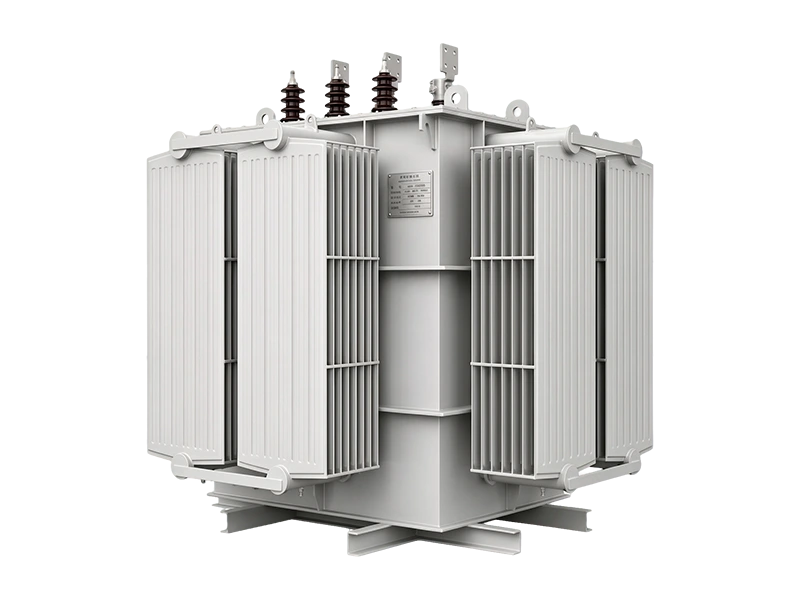
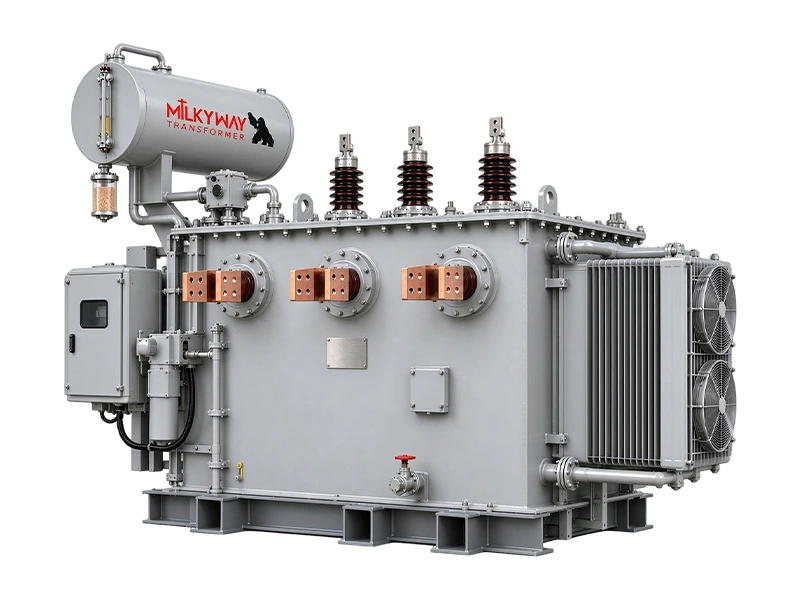
The magnetic voltage regulator is a voltage regulation device that organically combines a saturable reactor with a transformer. The reactor is mainly responsible for regulating the input voltage of the transformer, while the transformer steps the adjustable input voltage up or down to any voltage value required by the load. The two are connected both electrically and magnetically. Structurally, it resembles an ordinary power transformer, but unlike other types of voltage regulators, it has no mechanical transmission device and no movable contacts. This contactless, moving-part-free characteristic makes it particularly suitable for high-voltage output or low-voltage, high-current output applications. At present, this type of regulator has been widely adopted as the voltage-regulating power supply for salt bath furnaces, electron bombardment furnaces, high-voltage electrostatic precipitators, and similar equipment.Basic Structure and Circuit RelationshipA magnetic voltage regulator consists of two parts: a reactor and a transformer. The reactor is provided with an AC working winding and a DC control winding, while the transformer has a primary winding B1 and a secondary winding B2. The AC working winding G of the reactor is connected in series with the primary winding B1 of the transformer, and it is ...
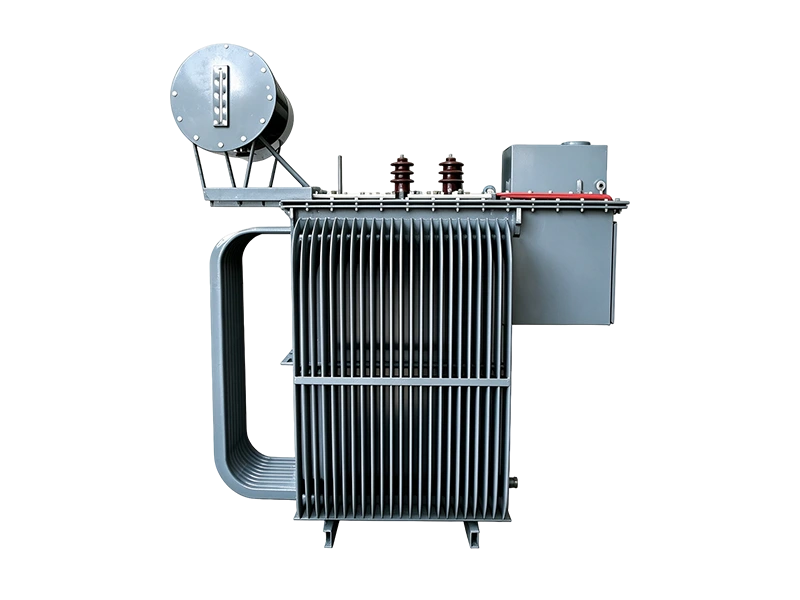
The furnace transformer is a dedicated power supply transformer for steelmaking electric arc furnaces, and its capacity is configured according to the size of the arc furnace and the requirements of the smelting process. To meet the voltage regulation needs during smelting, the furnace transformer controls the supply voltage through tap-changing methods, which fall into two main types: on-load tap changing and off-circuit tap changing.Tap-Changing Methods and Structural FormsLarge furnace transformers with on-load tap changing usually do not carry a series reactor. Their voltage regulation can be performed under load, meeting the operating requirements of continuous smelting in large electric arc furnaces.Medium and small furnace transformers with off-circuit tap changing can be divided, by structural form, into two types: those with a series reactor and those without. Both structures allow impedance to be changed at the two highest secondary voltage levels, but in different ways: the former relies on switching the series reactor in and out to change the impedance, while the latter changes the winding impedance by altering the connection method of the transformer's own high-voltage winding. This difference determines the respective focus of the two structures in terms of applicable scenarios and...
The noise generated by magnetic voltage regulators during operation originates from the core. Under the action of an alternating magnetic field, the dimensions of silicon steel sheets undergo slight changes—a phenomenon known as magnetostriction. Since the magnetostrictive variation cycle is half a period of the power frequency, the resulting body vibration has a fundamental frequency of twice the power frequency, manifesting as a continuous low-frequency hum. It can be said that the vibration of silicon steel sheets is mainly determined by the magnetostrictive properties of ferromagnetic materials.The magnetostriction coefficient is not fixed; it is constrained by multiple factors. The first is the material of the silicon steel sheets: under the same magnetic field strength, silicon steel sheets of better quality exhibit lower magnetostriction and therefore lower noise, while a higher magnetostriction coefficient corresponds to higher noise. The second is the magnetic field strength itself: the stronger the magnetic field, the more pronounced the magnetostriction, and the greater the noise.The surface condition and heat treatment process of silicon steel sheets are equally important. Whether the surface of the silicon steel sheets is coated affects magnetostriction—the coating adheres to the sheets...
The electroslag remelting transformer is the core power supply equipment in the electroslag remelting process, and its operating condition directly affects the smelting efficiency and quality of high-end metallic materials such as special steel and superalloys. Unlike ordinary power transformers, electroslag remelting transformers operate long-term under low-voltage, high-current conditions, enduring frequent load fluctuations and short-time overload surges, which makes insulation aging and thermal stress particularly prominent. Extending their service life requires systematic measures across multiple dimensions: load management, insulation maintenance, temperature control, and condition monitoring.I. Insulating Oil: the "Blood Test" of Equipment LifeInsulating oil performs three functions in a transformer—electrical insulation, heat dissipation, and component protection—and its health can be regarded as a "blood test report" of the transformer's internal condition. For electroslag remelting transformers, insulating oil tends to age faster than in ordinary transformers, because frequent power fluctuations during smelting cause the oil temperature to rise and fall repeatedly, accelerating oxidation and decomposition of the oil.Effective oil management should include regular sa...
In the transformer industry, competition in standardized products is becoming increasingly fierce, while special transformers—thanks to their deep adaptation to specific operating conditions—are emerging as a key arena for differentiation among manufacturers. Categories such as tin bath dry-type transformers, magnetic voltage regulators, furnace transformers, and rectifier transformers all, without exception, require manufacturers to possess interdisciplinary customization capabilities.Tin bath dry-type transformers serve float glass production lines. Mounted at the top of the tin bath, they operate long-term in high-temperature environments above 75°C. Their insulation must reach Class H, and they must be equipped with heat-resistant damping devices to prevent vibration under power from disturbing the tin liquid surface. In the event of a power outage, the entire glass production line would suffer enormous losses, making reliability requirements extremely high.Magnetic voltage regulators are irreplaceable in precision temperature-control scenarios such as heat treatment and vacuum brazing. They can steplessly and smoothly regulate output voltage under load, and, working with microcomputer control systems, achieve high-precision temperature control. Although thyristor power controllers pose a degree...
[email protected]
Tel/WhatsApp:+86 17766366912